

Spygate: Football’s spying controversies

Share
Leeds United coach Marcelo Bielsa has been “reminded of his responsibilities” this week after becoming embroiled in a spying controversy. The Argentine coach admitted to sending a staff member to scope out a Derby County training session ahead of the two sides’ clash on Friday night, with Derbyshire Police confirming it had approached a man with a spare change of clothes, binoculars and pliers. The incident has gone on to be dubbed ‘spygate’ by the media, and has been subject to a considerable amount of debate over the past few days.
While the footballing world has been left feeling somewhat uneasy over the controversy, it’s by no means the first such ‘spying’ incident to have taken place in the history of the beautiful game. Today, we’re taking a look at some recent infamous moments of espionage and subterfuge across the footballing world.
1. Sweden spy on South Korea (World Cup 2018)
Shortly prior the 2018 World Cup, staged in Russia, Sweden head coach Janne Andersson was forced to apologise after group-stage opponents South Korea reported that a closed training camp had been infilitrated by a ‘snooper’. A member of Andersson’s backroom staff, Lars Jacobsson, was asked to leave the practise session in Austria after being spotted by members of the Korean squad. The saga didn’t end there, however, as Jacobsson allegedly rented a nearby apartment in order to watch proceedings from further afar.
In a press conference, Andersson admitted that “[Jacobsson] watched from more of a distance” as a result of being asked to leave the session, and offered an apology to his side’s opponents, stating that: “It’s very important we show respect for opponents, always and in every way.”
For their part, South Korea devised an ingenious method of subterfuge to throw the Swedish spy off his game; the players switched shirt numbers, which was effective, according to manager Shin Tae-yong, due to the fact that “it’s very difficult for westerners to distinguish between Asians”.
2. Genoa’s ‘Rambo’-like spy (Serie A, 2013)
Italian Serie A side Genoa distanced themselves from reports of one of their staffers spying on rivals Sampdoria in September 2013, accusing youth team Luca De Pra of going rogue. Sampdoria fans alerted staff members after spotting De Pra hiding amongst woodland at a pivotal training session before the two sides met, decked out in full camouflage gear.
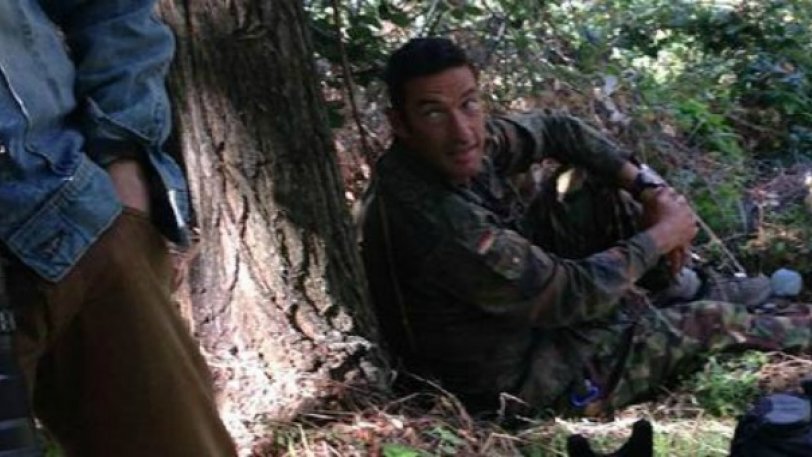
“Like Rambo hidden among the branches on the hill, Luca De Pra, Genoa goalkeeping coach and man of noble footballing ancestry, failed to overcome Sampdoria’s intelligence and counter intelligence operations,” I Blucerchiati said in a tongue-in-cheek statement to the media. “However, no prisoners were taken, and no blood was shed. Once tracked down and caught red-handed, the opposing side’s soldier was let free to return to base. You should always forgive your enemies, as nothing annoys them more.”
Genoa ultimately proved the success of their shady operation by coming out eventual 3-0 winners in the derby match the following weekend. De Pra, however, was suspended for his actions.
3. Battle for the London Stadium (Premier League, 2013)
With the announcement of a purpose-built stadium for the 2012 London Olympics came a three-way battle for tenancy status to decide who would occupy the ground following the conclusion of the Games. Tottenham, Leyton Orient and West Ham all wanted to switch their HQ to the then-named Olympic Stadium, and the bidding process was fraught with controversy and complaints of corruption and bias.
Ultimately, West Ham were named as preferred bidders, and managed to see off a number of legal challenges from their disgruntled opponents. The extent to which some parties were willing to go in an attempt to secure the stadium as their own became apparent in December 2013, when three men were fined for spying on senior West Ham figures as well as Olympic Park Legacy Company executives.
Personal and confidential information was taken without authorisation from West Ham co-chairman David Gold and David Sullivan and vice chairman Karren Brady, in an attempt to prove the existence of an inappropriate link between the bidding team and the OPLC (no such link was ever found).
Howard Hill, Richard Forrest and Lee Stewart all pleaded guilty at court to unlawfully obtaining personal data. Hill had been hired by Tottenham to investigate the bidding process, but the club strongly denied they had ever authorised any illegal activities or espionage. The three men were fined a total of £123,000 for their actions.
4. ‘Dronegate’ (Bundesliga, 2018)
Back in December 2018, German police were called to investigate after Bundesliga side Hoffenheim reported sightings of a drone flying above their training pitch prior to a match with Werder Bremen. Hoffenheim reportedly located the pilot, who was questioned by police on whether his actions violated the German Drone Act.
Astonishingly, Werder Bremen took to their official website and social media to admit authorising the use of the drone to record the training sessions, stating: “Werder Bremen this past Tuesday briefly used a drone. This is a result of talks between Bremen executive Frank Baumann, head coach Florian Kohfeldt and the employees of the analysis department.”
We are underway 🗣️
🗨️ #Baumann on the drone incident: "A drone was flown for a short period, but didn't fly over the pitch their team was training on. There was no threat. Everything has been resolved with @achtzehn99_en."#werder #RBLSVW pic.twitter.com/TwPhfAKJ4U
— SV Werder Bremen EN (@werderbremen_en) December 21, 2018
The two sides ultimately drew their encounter 1-1, and Hoffenheim coach Julian Nagelsmann claimed following the fixture that he wasn’t too concerned about being spied on; rather, he felt the issue was more one of player safety in the event of a technical malfunction. Interestingly, the side had themselves tested out the use of a drone to record their own sessions earlier in the year, although ultimately discontinued the practice due to it being “disturbing and distracting” to players.
It’s clear that in an environment as competitive as professional sports, players and coaches will do everything they can to gain the upper hand on their opponents. Sometimes, that activity may well cross over into the illegal, immoral, or somewhere inbetween. Let us know if we missed out any other prominent examples of spying in football in the comments below.

News Network





Leave a Reply